
When Hong Kong's Top Talent Pass Scheme opens doors for mainland families to pursue cross-border development, the stakes in educational planning have likewise escalated. The latest policy stipulates that dependent children arriving through the talent scheme must reside in Hong Kong for at least two years and apply via the JUPAS system to qualify for local subsidized tuition of HKD 42,100 per year (compared to HKD 200,000 for non-local students). This regulatory shift has forced countless families to grapple with dual challenges of "timing disparities" and "strategic pathway selection."
Amid these changing admissions dynamics, Dipont KCS International High School (Zhonghui Campus) has built a robust academic advantage through its Dual-A curriculum. By integrating the academic rigor of A-Levels with the flexibility of AP courses, the program not only aligns perfectly with Hong Kong universities’ admissions criteria but also enables dependent children to "accelerate past competitors" during the policy transition period—emerging as the optimal solution for families.
The underlying logic of Hong Kong's university admissions allocation reveals a stark reality:
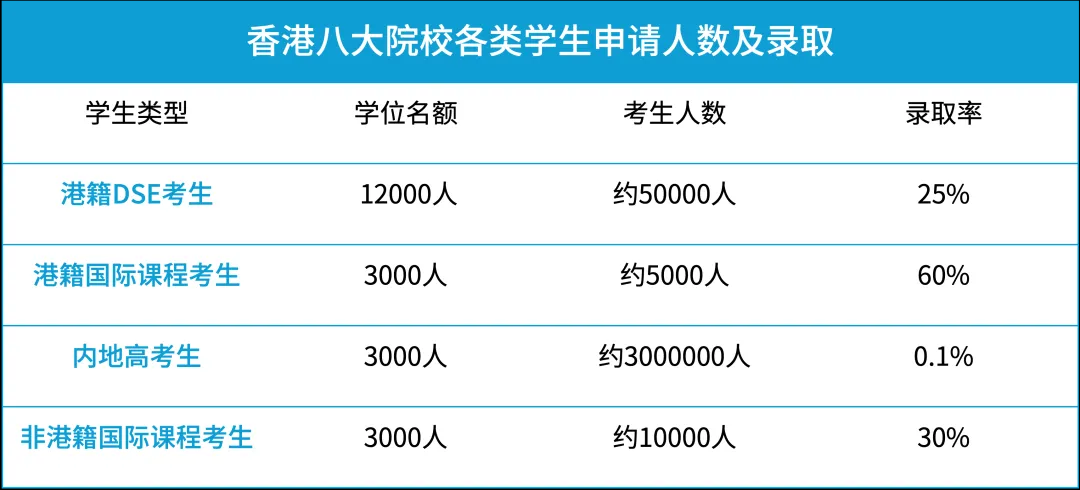
Local students face intense competition for 12,000 DSE seats, with tens of thousands of applicants annually and an admission rate of just 25%.
In contrast, the 3,000 seats reserved for international curricula represent a significantly less saturated pathway.
This means Hong Kong students pursuing international curricula avoid nearly 80% of homogeneous competitors, creating a strategic advantage.
While DSE appears to offer more available slots, the reality is starkly different:
Local Hong Kong students taking the DSE face intense competition, with only about 25% admission rate due to the enormous number of annual test-takers. In contrast, although the number of seats reserved for international curricula is smaller, the pool of Hong Kong students applying through this pathway is significantly smaller—making it a far less crowded and more advantageous route.
For non-local students, the advantage of this pathway becomes even more pronounced:
The 3,000 seats for mainland Gaokao applicants must accommodate millions of candidates, creating extreme competition.
The same 3,000 seats for international curricula, however, draw from a much smaller applicant pool.
This demonstrates that both Hong Kong and mainland students can avoid the “involute” competition of traditional pathways by choosing international curricula, which offer a more favorable admissions logic. Dipont Education Group’s track record confirms this: its students consistently achieve higher-than-average admission rates to Hong Kong universities through international curricula. In the 2024 cohort, 15% received offers from top institutions like HKU and CUHK—proving the strategic value of pathway selection.
The A-Level curriculum’s academic depth is fully leveraged here:
Drawing on the CAIE exam board’s 55 subject resources, the school customizes “A-Level + AP” subject combinations for grades 11-12.
Core A-Level subjects are paired with AP courses to ensure both depth and breadth, enabling students to focus on their strengths:
STEM-oriented students can emphasize mathematics, physics, and further mathematics.
Humanities-focused students can deepen their expertise in economics, history, or psychology.
This personalized approach truly allows students to “play to their strengths”.
The added value of AP courses further enhances applications:
Dipont KCS International High School (Zhonghui Campus) offers over a dozen AP courses (e.g., Calculus, Macroeconomics, Psychology), taught by bilingual and international faculty with an average of 12.5 years of teaching experience.
Taking AP alongside A-Level not only demonstrates academic capability and potential to universities but also allows students to earn college credits and adapt early to university-level academics.
Hong Kong’s higher education system—globalized yet rooted in British traditions—naturally favors international curricula:
Institutions like HKU and CUHK retain a strong British educational DNA, possessing an innate familiarity with interpreting A-Level results.
This cultural and academic alignment creates a seamless pathway for students pursuing international qualifications.

All four leading universities in Hong Kong explicitly recognize A-Level as a core admissions standard, with clear grade requirements:
HKU Engineering typically requires AAA
CUHK Business programs often demand A*AA
Such transparent criteria allow students to align their academic efforts precisely with target programs and strategically focus their preparation.
Moreover, A-Level offers stronger articulation with Hong Kong's university curricula:
The structure and pedagogy of A-Level closely mirror Hong Kong’s higher education system.
Students develop foundational knowledge and learning skills through A-Level that enable a seamless transition to university studies, fostering academic success from day one.
In the face of Hong Kong’s new policies, choosing the right curriculum is critical:
Contrary to popular belief, DSE does not inherently advantage local students—85% of families may be competing in an overcrowded pathway.
International curricula, particularly DKIA’s Dual-A Program, offer a smoother and more strategic route to university admission.
At Dipont KCS International High School (Zhonghui Campus), the Dual-A curriculum forms the core of an ecosystem enhanced by "full-cycle services" that build distinct competitive advantages:
Personalized Academic Planning
Course selection guidance tailored to individual strengths and university goals.
Strategic University Counseling
Expert support in navigating JUPAS and non-JUPAS applications.
Holistic Development Programs
Leadership, research, and extracurricular opportunities aligned with Hong Kong’s talent development priorities.
Policy Transition Support
Dedicated assistance for dependent children adapting to residency and academic requirements.
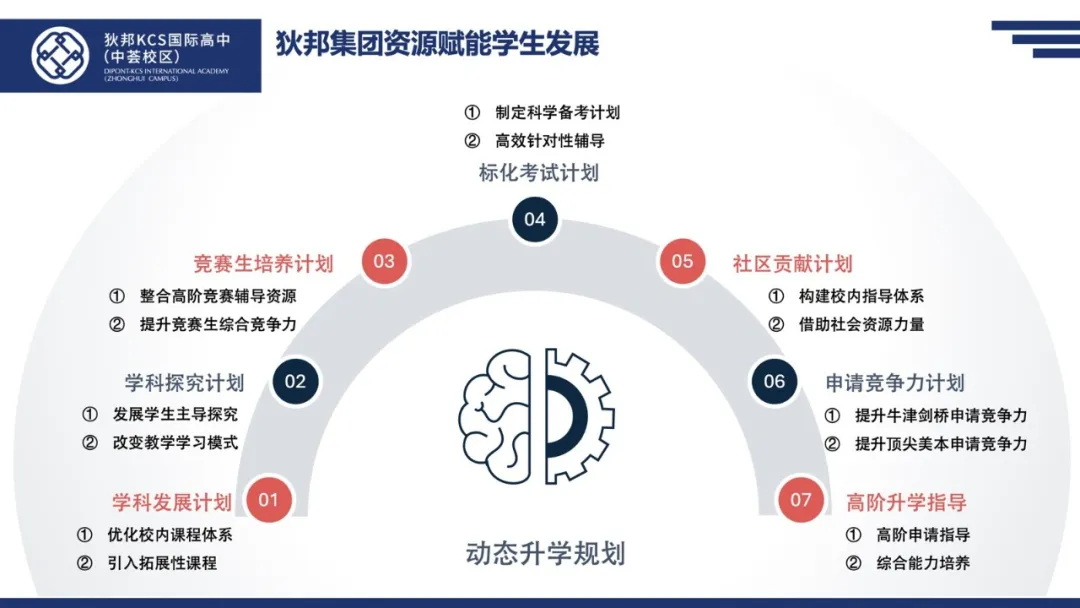
1. Elite Faculty Team: Academic Excellence Anchored by 12.5 Years of Average Teaching Experience
This team brings together educators from top institutions worldwide—including SWIS, Shenzhen College of International Education, Linkage International, Shanghai Pinghe, and overseas organizations—with a balanced 1:1 ratio of Chinese to international teachers. With over 70% holding master’s or doctoral degrees and 80% being overseas returnees, they redefine international education through a fusion of Eastern and Western pedagogical excellence.
2. Summit Program & Oxbridge Prep: An "Academic Accelerator" for Top Talents
The Summit Program at Dipont KCS International High School (Zhonghui Campus) targets high-potential students who demonstrate courage in inquiry and innovation, excellence in learning and critical thinking, and perseverance in reflection. It offers a fully personalized, one-stop development plan that balances academic excellence with character building and self-driven growth—empowering students to unlock their potential, transcend limits, and pursue lifelong fulfillment.
Oxbridge Preparation Initiatives:
A specialized super-curriculum covering A-Level subject mastery, academic competitions, and Oxbridge entrance tests
A joint summer camp with King’s College School (KCS) for Oxbridge application training
Collaborative research projects and interview simulations with professors from Oxford and Cambridge, developed by Dipont experts
3. Holistic Education Ecosystem: Transforming Academic Achievers into Well-Rounded Leaders
DKIA believes that "outstanding applicants are more than their transcripts." Our three-dimensional framework integrates academics, practical experience, and character development:
Personalized support systems prioritizing mental health, skill cultivation, and ethical growth
A mentor program starting from Grade 9 tailoring pathways based on interests and talents
Monthly parent communication sessions updating policy changes, academic progress, and admissions trends—forging a strong home-school partnership